
Published by BTEKWorld | Business Technologies World (Pvt) Ltd Category: Biometric Solutions | Reading Time: Approximately 9 minutes
Walk into almost any medium or large business in Sri Lanka today and you will find one of two attendance management realities. Either staff are signing a paper register at the start and end of each shift, a system that is manual, easily manipulated and entirely dependent on supervisor diligence. Or they are swiping an ID card through a reader, a system that is faster than paper but still fundamentally flawed because a card can be handed to a colleague, lost, cloned or forgotten. In both cases, the business is making payroll decisions based on data it cannot fully trust.
Biometric attendance systems solve this problem completely. They verify identity using physical characteristics that are unique to each individual and impossible to share, replicate or forget. The result is an attendance record that is accurate, tamper-proof and automatically ready for payroll processing — every single day, without manual intervention.
This guide covers everything Sri Lankan business owners, HR managers and operations heads need to know about biometric attendance systems — how they work, which type is right for your business, what the implementation process looks like and how to choose the right supplier.
WHAT IS A BIOMETRIC ATTENDANCE SYSTEM
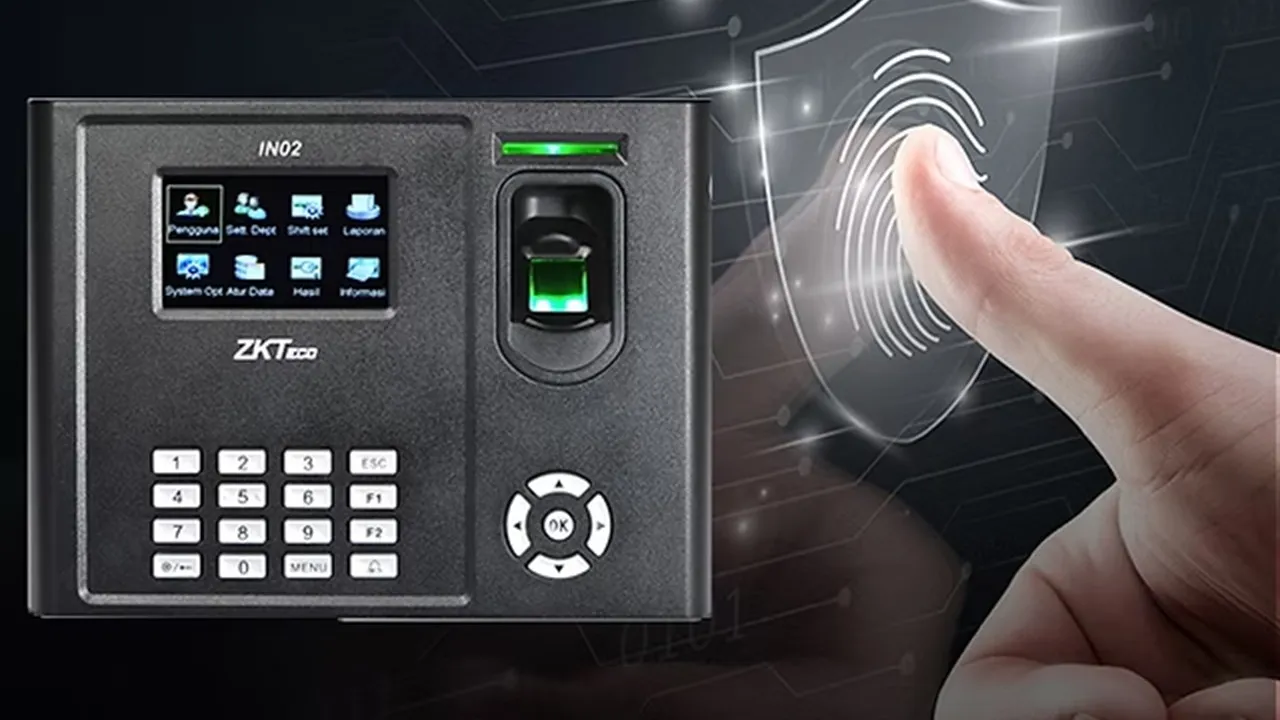
A biometric attendance system is a hardware and software solution that records when employees arrive and depart using biometric identity verification rather than cards, PINs or manual signatures. The system consists of one or more biometric devices installed at entry and exit points, connected to attendance management software that collects, stores and analyses the time and attendance data.
When an employee arrives at work, they present their finger, face or eye to the device. The device matches the presented biometric against the enrolled template stored in its memory and, if there is a match, records the timestamp as a verified attendance event. The software then uses this data to calculate working hours, overtime, late arrivals, early departures and absences — automatically generating reports that feed directly into payroll processing.
The defining characteristic of a biometric system is that the identity verification is tied to the physical person. Unlike a swipe card or a PIN, a fingerprint or face cannot be borrowed, shared or used by anyone other than the person it belongs to. This single characteristic fundamentally changes the reliability of attendance data.
THE PROBLEM WITH TRADITIONAL ATTENDANCE METHODS IN SRI LANKA
Before exploring biometric solutions in detail, it is worth understanding why the traditional alternatives fall short and why this matters financially for Sri Lankan businesses.
Manual paper registers are the most widely used attendance method among small and medium businesses across Sri Lanka. The problems are well known. Staff can sign for colleagues who have not yet arrived. Handwriting is difficult to audit reliably at scale. Supervisors must manually tally hours at the end of each period. The data cannot be automatically integrated with payroll software. And the registers themselves are vulnerable to loss, alteration or damage. Despite these limitations, many businesses continue using paper registers simply because they have never evaluated the cost of doing so.
Swipe card systems address some of these issues by creating a digital timestamp record, but they introduce a different and arguably more serious problem — the card and the person are two separate things. A card can be given to a friend to clock in on behalf of an absent employee. Cards are lost regularly, requiring replacement and creating security gaps. Cloned or duplicated cards are a genuine risk in environments where access control matters. And like paper registers, swipe card data still requires manual checking and exception management.
PIN-based systems share the same fundamental flaw as cards. A PIN can be told to another person. In shift-based environments where supervisors are managing large numbers of staff across different floors or areas, verifying that the person entering the PIN is actually the employee assigned to it is practically impossible.
The collective term for these fraudulent practices — where one employee clocks in on behalf of another — is buddy punching. Research across multiple markets consistently estimates that buddy punching costs businesses between one and five percent of total payroll. For a Sri Lankan manufacturer with a monthly payroll of five million rupees, even a conservative two percent buddy punching rate represents one hundred thousand rupees in fraudulent payroll every single month. A biometric system eliminates this loss from day one.
HOW BIOMETRIC ATTENDANCE DEVICES WORK
Understanding how biometric devices capture and verify identity helps you make a better decision about which type is right for your environment.
Fingerprint recognition is the most widely deployed biometric modality globally and in Sri Lanka. When an employee is first enrolled in the system, they place one or more fingers on the device’s sensor. The device captures a digital representation of the fingerprint’s unique ridge patterns and stores this as a mathematical template — not an image of the fingerprint itself. Each subsequent time the employee places their finger on the sensor, the device compares the new scan against the stored template. If the match score exceeds the configured threshold, the identity is confirmed and the attendance event is recorded.
Modern fingerprint sensors complete this process in under one second. The devices used in enterprise attendance systems are significantly more sophisticated than consumer fingerprint sensors found on smartphones, designed to handle thousands of enrolments and verification cycles with consistent accuracy under varying conditions including minor cuts, dry skin and light dirt on the finger surface.
Face recognition works on a similar principle but uses the camera and infrared sensors on the device to capture and map the unique geometry of a person’s face. The device creates a mathematical model of facial landmarks — the distances between eyes, the shape of the nose, the contour of the jaw — and compares this against the enrolled face template. Modern face recognition terminals achieve verification speeds comparable to fingerprint systems, typically under half a second, and most current models can recognise individuals wearing masks by focusing on the upper facial geometry.
Face recognition is increasingly preferred in environments where hygiene is a priority, where staff handle materials that affect fingerprint quality, or where high-traffic entrance points require fast throughput without any physical contact with the device.
Iris recognition uses infrared cameras to capture the unique pattern of the iris, the coloured ring around the pupil of the eye. Iris recognition offers the highest biometric accuracy of any commonly deployed modality and is largely unaffected by ageing, skin conditions or environmental factors. It is used in high-security environments and is less common in standard attendance management deployments due to its higher cost.
Card-based biometric systems combine a biometric reader with RFID or Mifare card reading capability. Employees tap a card and then verify with a fingerprint or face, providing two-factor authentication. This approach is used where a higher level of security is required and where a physical credential also serves as an access card or ID badge.
CHOOSING THE RIGHT BIOMETRIC MODALITY FOR YOUR BUSINESS
The right biometric modality depends on several factors specific to your workplace environment, workforce size and operational requirements.
Fingerprint is the right choice for most office, retail and light industrial environments. It offers the best combination of accuracy, speed, cost and simplicity. Device costs are lower than face recognition terminals, enrolment is straightforward and the technology is extremely mature and reliable. The main consideration is that workers in some industries — construction, certain types of manufacturing, food processing and agriculture — may have worn fingerprints due to the physical nature of their work. In these cases, fingerprint recognition rates may be lower and a face recognition or multi-modal system is more appropriate.
Face recognition is ideal for manufacturing environments, healthcare facilities, food processing plants, hotels and any environment where hygiene, speed or fingerprint quality is a concern. Touchless operation means no surface contamination between users and no degradation of the sensor over time from physical contact. The higher device cost compared to fingerprint terminals is offset by the operational benefits in environments where face recognition is the more appropriate solution.
Multi-modal devices that offer fingerprint, face, card and PIN in a single terminal provide the most flexibility. Employees can use whichever modality works best for them, administrators can assign different verification methods by role or security requirement, and the same device can serve dual purposes as both a time attendance terminal and an access control reader.
For very large workforces, outdoor environments or high-security applications, a combination of face recognition and card may be the most practical approach — providing both speed and a physical credential that can also serve as an employee ID.
KEY FEATURES TO LOOK FOR IN A BIOMETRIC ATTENDANCE SYSTEM
Not all biometric devices and software platforms are equal. When evaluating options for your business, several features distinguish a professional enterprise-grade system from a basic consumer product.
User capacity is the first consideration. Entry-level devices may support 500 to 1,000 fingerprint templates, which is insufficient for medium and large organisations. Look for devices that comfortably exceed your current workforce with room for growth. Enterprise devices typically support 3,000 to 50,000 fingerprint or face templates depending on the model.
Transaction storage refers to how many attendance records the device can hold internally before data must be transferred to the software. Devices with larger transaction memory provide a safety net if network connectivity is temporarily interrupted, ensuring no attendance records are lost.
Connectivity options determine how the device communicates with your attendance management software. Modern devices support wired LAN connection, Wi-Fi, and in some cases cellular data connectivity. Wired LAN is the most reliable option for permanent installations. Wi-Fi provides installation flexibility. For sites without network infrastructure, offline devices that store data locally and sync when connected or via USB are also available.
The attendance management software is as important as the hardware. Look for software that can manage multiple devices and multiple sites from a single platform, configure shift schedules and work rules appropriate to your business, handle different categories of leave and calculate overtime according to your company policy, generate standard attendance and payroll reports in formats compatible with your existing payroll system, and provide real-time alerts for exceptions such as late arrivals or unauthorised absences. The ability to integrate with your existing HR or payroll software via data export or direct API is a significant operational advantage.
Access control integration is relevant if you want the same device to also control door entry. Many biometric attendance terminals can be connected to electromagnetic locks, electric strikes and door release mechanisms, giving you dual functionality from a single device installation.
Environmental ratings matter for installations outside air-conditioned office environments. Devices installed in warehouses, factories, outdoor locations or humid environments should carry an IP65 or higher ingress protection rating, indicating resistance to dust and water spray.
IMPLEMENTING A BIOMETRIC ATTENDANCE SYSTEM — THE PROCESS
The implementation process for a biometric attendance system is straightforward when managed by an experienced supplier, typically completed in one to three days for most business environments depending on the number of devices and sites involved.
The process begins with a requirements assessment covering the number of employees to be enrolled, the number and locations of attendance points, the shift structure and work rules applicable to your business, and your existing payroll or HR software. This information determines the right device models, the number of units needed and the software configuration required.
Following the assessment, devices are installed at the agreed locations. For indoor office environments this is a simple wall-mounting exercise. For factory or outdoor locations, appropriate weatherproofing, cabling conduit and power supply arrangements need to be considered. The device is then connected to the network and the attendance management software is installed and configured on a designated PC or server.
Employee enrolment follows installation. Each employee’s biometric is registered in the device, typically taking 15 to 30 seconds per person for fingerprint enrolment. For larger workforces, enrolment is often conducted over one to two days with staff cycling through the enrolment station in groups. Work schedules, shift rules, leave entitlements and overtime policies are then configured in the software according to your company’s HR rules.
After enrolment, the system immediately begins capturing verified attendance data. The implementation team should provide training to the HR or payroll administrator responsible for managing the system, covering how to run reports, manage exceptions, add new employees, handle lost or changed biometrics and troubleshoot common issues.
INTEGRATING BIOMETRIC ATTENDANCE WITH PAYROLL
One of the most significant operational benefits of a biometric attendance system is the ability to directly connect attendance data to payroll processing, eliminating the manual calculation and data entry that currently absorbs significant HR staff time in most Sri Lankan businesses.
Most professional attendance management software can export attendance summary data in Excel or CSV format, which can then be imported into your payroll software. More advanced integrations allow direct data exchange between the attendance system and payroll platforms, updating payroll records automatically based on verified attendance.
The software calculates each employee’s actual worked hours against their scheduled hours for the period, identifies late arrivals, early departures and absences, calculates overtime hours based on the thresholds and rates configured in the system, and produces a clean summary report by employee, department and site. This report replaces what was previously a manual tallying exercise, saving hours of HR staff time every payroll cycle and virtually eliminating payroll calculation errors.
BIOMETRIC SYSTEMS FOR MULTI-SITE BUSINESSES
Businesses operating across multiple locations — retail chains, hotel groups, manufacturing companies with several plants, schools with multiple campuses — face an additional challenge in attendance management. Consolidating attendance data from multiple sites into a single payroll process is time-consuming and error-prone when each site operates its own manual or card-based system.
A networked biometric attendance system with centralised software solves this entirely. Devices at each site communicate their attendance data to a central server over the internet. The HR or payroll team at head office can view real-time attendance across all sites on a single dashboard, run consolidated reports by site, department or individual, and process payroll for the entire group from a single platform.
For businesses where employees move between sites, the system can be configured to allow enrolment at one site and verification at any other — important for sales staff, supervisors and executives who regularly visit multiple locations.
COMMON QUESTIONS ABOUT BIOMETRIC ATTENDANCE SYSTEMS
One of the most frequent concerns raised by employees and HR managers alike is about data privacy. Biometric attendance devices do not store an image of the fingerprint or face. They store a mathematical template — a numerical representation of the biometric pattern — that cannot be reverse-engineered into a usable image. This template is stored securely within the device and the attendance management software, and is not shared with any external party.
Another common question is what happens if an employee’s fingerprint cannot be read reliably. This situation, sometimes called a dry finger or worn fingerprint issue, affects a small proportion of users. Most enterprise attendance systems handle this by allowing alternative verification methods for affected individuals — face recognition, card or PIN — ensuring no employee is unable to clock in simply because of a temporary or permanent fingerprint quality issue.
Businesses also ask about what happens to the system if the internet connection or power goes down. Quality enterprise devices store attendance records locally in their internal memory, typically holding tens of thousands of transactions, and sync the data to the central software once connectivity is restored. Short-term outages do not result in lost attendance data. For critical installations, uninterruptible power supply units can be used to keep devices operational during brief power interruptions.
WHAT A BIOMETRIC ATTENDANCE SYSTEM COSTS IN SRI LANKA
The investment required varies depending on the number of devices, the modality selected, the software platform and whether installation is included. A single fingerprint attendance terminal for a small business with up to 50 staff represents a modest, one-time hardware investment that typically pays back within a few payroll cycles simply through the elimination of buddy punching and manual processing time.
For medium businesses with multiple departments or floors, multiple devices are typically needed to cover all attendance points. For larger businesses or multi-site operations, the investment scales with the number of devices and the complexity of the software configuration.
When calculating return on investment, consider the current cost of buddy punching in your organisation, the HR staff time currently spent on manual attendance tallying, the cost of payroll errors due to inaccurate data, the cost of disputes arising from attendance disagreements, and the administrative burden of managing lost or damaged swipe cards. Across most Sri Lankan businesses of 50 employees or more, the total financial benefit of a biometric attendance system exceeds the investment cost within six to twelve months.
HOW TO CHOOSE A BIOMETRIC ATTENDANCE SUPPLIER IN SRI LANKA
The market for biometric attendance systems in Sri Lanka includes a range of suppliers, from dedicated technology providers to general electronics importers. Choosing the right supplier is as important as choosing the right hardware because the quality of installation, software configuration, enrolment support and after-sales service directly determine whether your system performs reliably long after the devices are installed.
Look for a supplier who carries authorised stock from recognised global brands such as ZKTeco, Hikvision or Suprema rather than unbranded or grey-market devices. Authorised resellers can offer genuine manufacturer warranty and access to firmware updates and technical documentation. Ask whether the supplier has their own in-house technical team for installation and after-sales support, or whether they outsource this to third parties. Verify that they have experience deploying systems for businesses of a similar size and industry to yours. A supplier who has installed attendance systems in a garment factory with 500 workers is better positioned to handle the enrolment logistics and shift configuration required for a similar deployment than one whose experience is limited to ten-person offices.
Ensure the software included with the system supports the work rules applicable to your business including shift patterns, overtime policies and leave categories. Ask about the process for adding new employees, replacing a device and accessing support when issues arise after installation.
GETTING STARTED
If you are ready to replace your paper register or swipe card system with a biometric attendance solution, the most practical starting point is a conversation with an experienced supplier who can assess your specific requirements and recommend the right solution without overselling or under-specifying.
At BTEKWorld, we are an authorised reseller of ZKTeco biometric devices and a range of complementary brands, with over a decade of experience implementing attendance and access control systems for Sri Lankan businesses across manufacturing, retail, healthcare, hospitality, education and corporate sectors. Our in-house technical team handles the full implementation from device installation and employee enrolment through to software configuration, HR training and ongoing after-sales support.
We supply systems suitable for businesses of all sizes, from a single-device installation for a twenty-person office to multi-site deployments managing thousands of employees across different locations island-wide.
To arrange a free consultation or request a no-obligation quote, contact our team by calling +94 114 383 683, messaging us on WhatsApp at +94 777 351 562, or emailing btechlk@gmail.com. You can also submit a quote request through our website and our team will respond within one business day.
ABOUT BTEKWORLD
Business Technologies World (Pvt) Ltd is Sri Lanka’s trusted B2B supplier of RFID, Barcode and Biometric hardware and solutions. Operating from our Nugegoda office since 2010, we have delivered over 500 technology projects for enterprises across Sri Lanka. All products we supply carry manufacturer warranty and are supported by our local technical team.